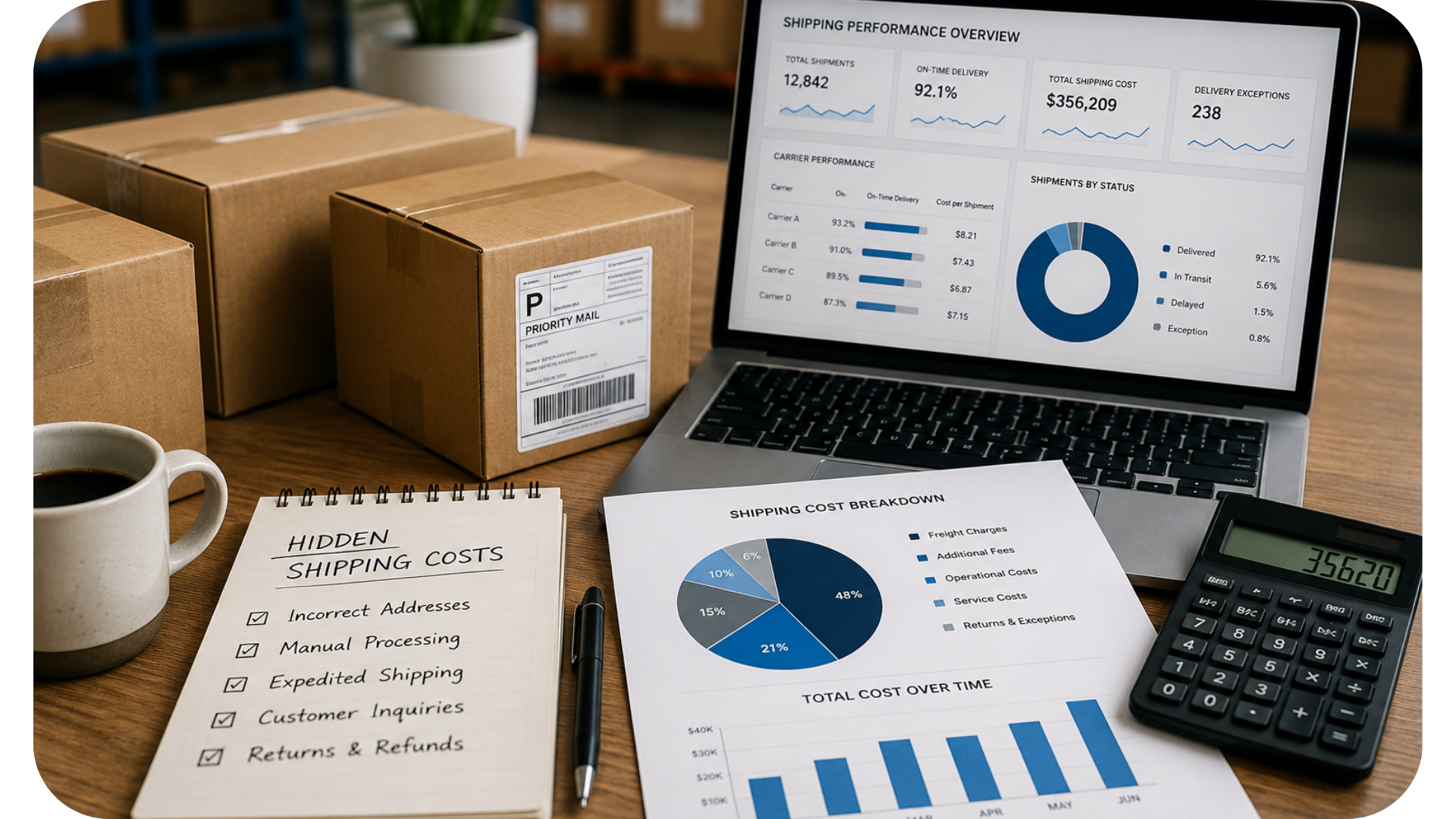
When businesses think about shipping costs, the first thing that comes to mind is usually carrier rates. While transportation costs are certainly important, they represent only one part of the overall picture.
Hidden costs can quietly affect profitability through delayed deliveries, inefficient processes, unnecessary carrier spending, and poor shipment visibility. Over time, these expenses can add up and impact customer satisfaction, operational efficiency, and long-term business growth.
Understanding where these costs originate is the first step toward building a smarter shipping strategy.
The price printed on a shipping invoice rarely reflects the true cost of moving products.
Many businesses experience additional expenses that aren't immediately obvious, including:
Individually, these costs may seem manageable. Across hundreds or thousands of shipments, however, they can significantly affect operating margins.
Minor issues often create ripple effects throughout the entire supply chain.
For example, choosing a carrier based solely on price may lead to longer transit times or inconsistent service. Delayed deliveries can generate customer complaints, increase support requests, and reduce repeat business.
Similarly, manually comparing carrier rates or entering shipment information by hand increases the likelihood of human error. These mistakes often require additional time and resources to resolve.
Optimizing shipping isn't just about saving money on transportation. It's about improving the entire shipping process.
One of the most valuable tools available to modern businesses is real-time shipment visibility.
Having access to accurate shipping data allows teams to:
Instead of reacting after problems arise, businesses can make proactive decisions that improve both efficiency and customer satisfaction.
Every shipment generates valuable information.
Tracking key performance indicators such as transit times, on-time delivery rates, shipping costs, and carrier performance provides insights that support better operational decisions.
Rather than relying on assumptions, businesses can use measurable data to identify opportunities for improvement and build a more efficient shipping strategy.
Over time, consistent analysis helps organizations reduce waste, improve delivery performance, and strengthen customer relationships.
Improving shipping performance doesn't necessarily require major operational changes.
Many businesses begin by focusing on a few practical areas:
Different carriers perform better depending on destination, package type, and service level. Regular evaluation helps ensure you're choosing the right carrier for each shipment.
Reducing manual processes minimizes errors while allowing teams to focus on higher-value work.
Real-time tracking provides greater control over shipping operations and helps resolve issues before they affect customers.
Reviewing shipping metrics regularly helps uncover trends, identify inefficiencies, and support continuous improvement.
Shipping is no longer simply a back-office function.
It influences customer satisfaction, operational efficiency, brand reputation, and profitability.
Businesses that regularly evaluate their shipping processes are better positioned to reduce costs, improve delivery performance, and adapt to changing customer expectations.
By focusing on visibility, data, and continuous improvement, organizations can transform shipping from an operational expense into a competitive advantage.
Hidden shipping costs often go unnoticed because they accumulate gradually through everyday operations. Addressing these challenges begins with understanding where inefficiencies exist and using data to make informed decisions.
Smarter shipping isn't just about moving packages more efficiently. It's about creating better experiences for customers while building stronger, more resilient business operations.

