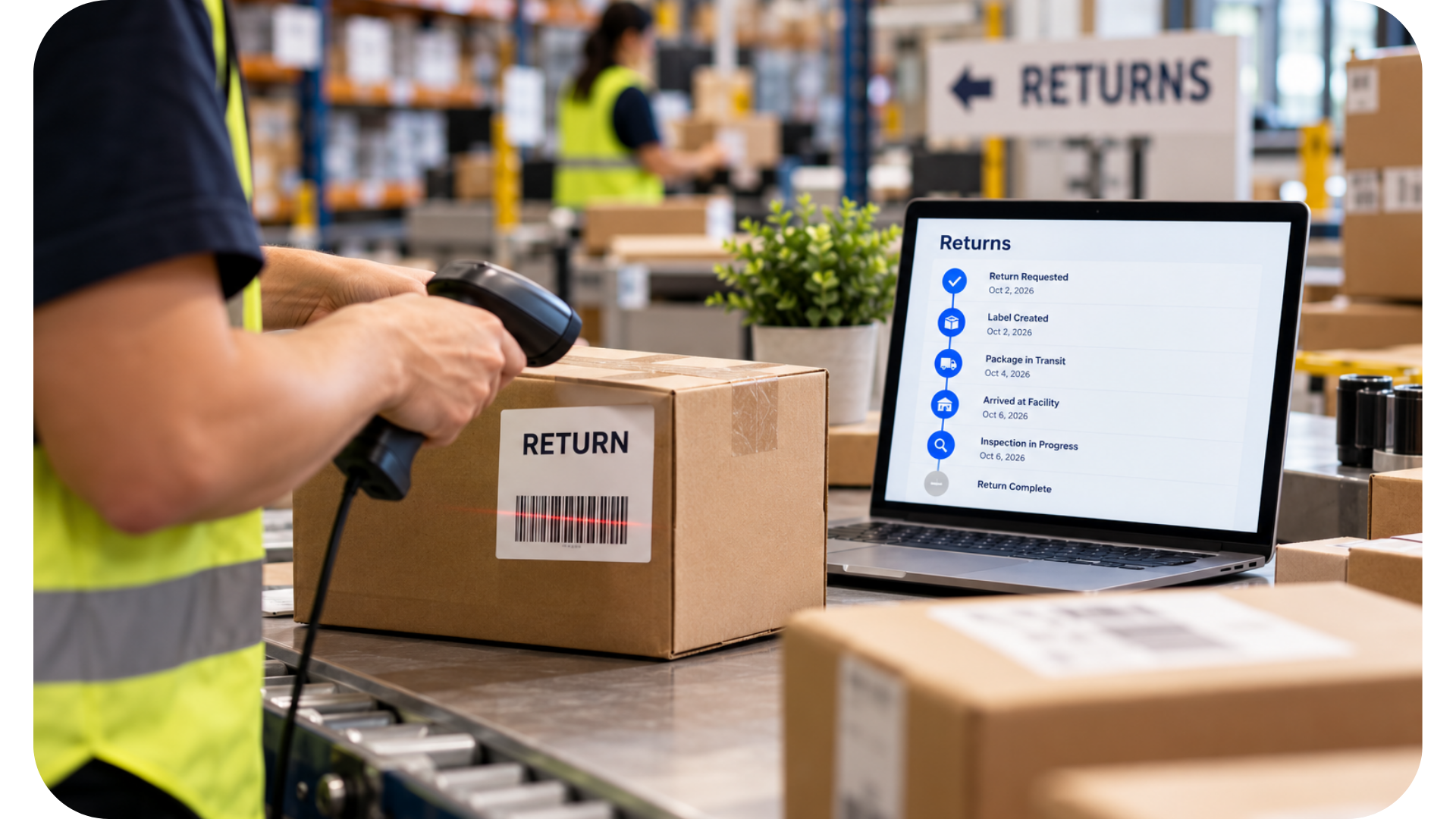
A customer return does not end when a parcel is dropped off. For an ecommerce business, the return journey can involve authorization, label creation, carrier handoff, in-transit tracking, receiving, inspection, restocking, and customer communication. If those steps are disconnected, returns can create avoidable delays for customer service, warehouse, and finance teams.
A clear reverse logistics process helps businesses understand where returned items are, what needs to happen next, and how to close the loop with the customer. The goal is not simply to move a package back. It is to make each step predictable, visible, and manageable.
Reverse logistics is the movement of products from the customer back to a retailer, fulfillment center, repair location, or other designated destination. In ecommerce, it may include return shipping, receiving, inspection, restocking, refurbishment, recycling, or disposal according to company policy.
The exact process depends on the product, return policy, and operating model. A clothing retailer may prioritize quick inspection and restocking. An electronics seller may require serial-number checks or diagnostic testing. A high-volume retailer may need routing rules so returns reach the correct facility without unnecessary handling.
When customers cannot easily understand eligibility, packaging requirements, or where to send an item, they may contact support or ship the parcel incorrectly. Clear instructions and a consistent authorization process reduce confusion before the package enters the carrier network.
A return may pass through several stages before reaching a facility. If teams cannot tell whether a label was created, a parcel was accepted, or a return arrived, they may struggle to answer questions or identify exceptions. Define the status updates that matter to customers and internal teams.
A returned package reaching the warehouse is not the same as a return being completed. Items may need to be opened, inspected, matched to an order, and assigned a disposition. Without a planned receiving process, packages can accumulate and refunds or inventory updates may be delayed.
Start with measures that can lead to action. Return cycle time shows how long it takes to move from initiation to processing completion. Processing backlog shows how much work is waiting at the facility. Return reasons may reveal recurring product, listing, packaging, or fulfillment issues. Exception rates help identify where packages or records are getting stuck.
Metrics are most useful when teams agree on definitions and record milestones consistently. Avoid comparing periods without noting changes in the process or data capture.
Return shipping is still parcel shipping, so clear shipment information can help teams manage the journey back. ShipX describes a platform built around multi-service parcel delivery, tracking, and integrations. Businesses evaluating a workflow should confirm how return movements fit with their existing systems, what tracking information is available, and how teams will use it. Confirm precise capabilities and return-shipping scope with ShipX before making product-specific promises.
Returns become harder to manage as order volume grows, facilities multiply, or product categories require different handling. A documented workflow gives teams a repeatable starting point and makes bottlenecks easier to spot. Review the process regularly, update routing rules when operations change, and make sure customer communication matches what the system can actually confirm.
Want to evaluate how your parcel operation handles outbound and return shipments? Contact ShipX to discuss your shipping workflow, visibility needs, and integration requirements.

